
Unlocking the Future of AI in Switzerland's Tech Landscape
future of AI in switzerland

Unlocking the Future of AI in Switzerland's Tech Landscape

Discover how Switzerland is pioneering AI innovation and shaping its technological destiny with a strategic, ethical approach.

Explore Swiss AI

Key Takeaways

  • ✓ Switzerland ranks among the top countries globally for AI readiness and innovation.
  • ✓ Leading universities like ETH Zurich and EPFL are at the forefront of AI research.
  • ✓ The Swiss government actively promotes ethical AI development and data privacy.
  • ✓ AI is transforming key Swiss sectors including finance, healthcare, and manufacturing.

How It Works

1
Strategic Investment

Switzerland invests heavily in AI research and development through public-private partnerships. This fosters a robust ecosystem for startups and established companies.

2
Academic Excellence

World-renowned Swiss universities attract top AI talent and conduct groundbreaking research. This creates a strong foundation for future AI advancements and applications.

3
Ethical Frameworks

The nation prioritizes the development of ethical AI guidelines and responsible innovation. This ensures public trust and sustainable growth of AI technologies.

4
Industry Integration

Swiss industries actively adopt AI solutions to enhance efficiency, drive innovation, and maintain global competitiveness. This practical application accelerates AI's impact across sectors.

Switzerland's AI Ecosystem: A Hub of Innovation and Research

A bearded engineer holds a ceramic cup while a robotic arm assists, showcasing modern technology. Photo: Pavel Danilyuk / Pexels
The future of AI in Switzerland is not just a projection; it's a rapidly unfolding reality, deeply rooted in a vibrant ecosystem of academic excellence, governmental support, and private sector dynamism. Switzerland, a nation renowned for its precision, innovation, and stability, is strategically positioning itself as a global leader in artificial intelligence. This positioning is supported by a confluence of factors, including world-class universities, a highly skilled workforce, and a proactive regulatory environment that balances innovation with ethical considerations. Institutions like ETH Zurich and EPFL Lausanne are not merely teaching AI; they are actively shaping its future through pioneering research in machine learning, robotics, computer vision, and natural language processing. These universities serve as crucial incubators for talent, attracting brilliant minds from across the globe and fostering a culture of interdisciplinary collaboration. Their research often translates directly into industrial applications, bridging the gap between theoretical breakthroughs and practical solutions. Beyond academia, a burgeoning startup scene is contributing significantly to the Swiss AI landscape. These startups, often spun out of university research, are developing innovative AI solutions for a variety of sectors, from fintech and biotech to advanced manufacturing and sustainable energy. The availability of venture capital, combined with a supportive regulatory framework, creates fertile ground for these young companies to thrive and scale. The Swiss government plays a pivotal role in nurturing this ecosystem. Through initiatives like the national research program on AI and calls for responsible innovation, it actively promotes the development and deployment of AI technologies. This governmental support extends to fostering an environment conducive to data privacy and security, which is paramount for building trust in AI systems. The commitment to ethical AI is a cornerstone of Switzerland's strategy, ensuring that technological advancements are aligned with societal values. This holistic approach, encompassing research, innovation, and responsible governance, makes Switzerland a compelling case study for the future of AI. The nation's ability to attract and retain top talent, coupled with its focus on high-value, specialized applications, distinguishes its AI strategy from other global players. This strong foundation ensures that the future of AI in Switzerland will continue to be characterized by innovation, ethical leadership, and economic growth, making it a critical player in the global AI discourse. For further insights into the broader technological advancements, consider exploring the tech landscape in Switzerland.

Transformative Impact Across Key Swiss Industries
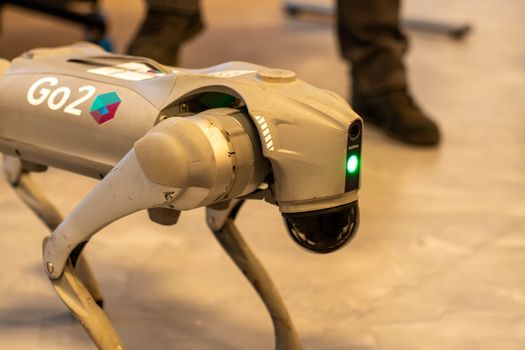
A robotic dog with 'Go2' branding, captured indoors, showcasing modern technology. Photo: Vladimir Srajber / Pexels
The transformative potential of AI is being realized across Switzerland's most vital industries, fundamentally altering operations, driving efficiency, and unlocking new avenues for growth. The unique economic structure of Switzerland, characterized by high-value-added sectors, provides fertile ground for AI adoption and innovation. In the financial sector, a cornerstone of the Swiss economy, AI is revolutionizing everything from algorithmic trading and fraud detection to personalized wealth management and risk assessment. Swiss banks and fintech companies are leveraging machine learning algorithms to analyze vast datasets, identify market trends, and enhance security protocols, thereby improving customer experience and operational efficiency. The integration of AI is not just about automation; it's about augmenting human capabilities, allowing financial professionals to focus on more complex, strategic tasks. Similarly, the healthcare and life sciences sectors are experiencing a profound AI-driven transformation. Switzerland, a global hub for pharmaceuticals and medical technology, is at the forefront of using AI for drug discovery, personalized medicine, diagnostic imaging, and predictive analytics. AI algorithms can analyze complex genomic data, accelerate the identification of new drug candidates, and assist clinicians in making more accurate diagnoses. This leads to more effective treatments, reduced costs, and ultimately, better patient outcomes. The precision manufacturing and engineering industries, another hallmark of Swiss excellence, are also embracing AI. From optimizing production processes and predictive maintenance to quality control and supply chain management, AI is enhancing productivity and minimizing waste. Robotics, powered by advanced AI, is becoming increasingly sophisticated, enabling greater automation and precision in manufacturing facilities. This integration allows Swiss companies to maintain their competitive edge in a globalized market, producing high-quality, specialized goods with unparalleled efficiency. Furthermore, AI is making significant inroads into the retail, agriculture, and energy sectors, optimizing resource allocation, improving customer engagement, and fostering sustainable practices. The ability of AI to process and interpret complex data sets is proving invaluable in addressing challenges ranging from optimizing crop yields to managing smart grids. The widespread adoption of AI across these diverse industries underscores its versatility and its critical role in sustaining Switzerland's economic prosperity and innovation leadership. The future of AI in Switzerland is thus intricately linked to the continued evolution and application of these technologies within its core economic pillars, promising a future of enhanced productivity, innovation, and societal benefit.

Navigating Ethical Challenges and Regulatory Frameworks in Swiss AI

Conceptual image showing the words 'Ethical Hacking' on a textured abstract background. Photo: Ann H / Pexels
As the future of AI in Switzerland unfolds, navigating the complex landscape of ethical challenges and establishing robust regulatory frameworks are paramount. Switzerland, with its strong tradition of privacy and human rights, is proactively addressing these concerns to ensure that AI development and deployment are conducted responsibly and sustainably. The ethical implications of AI, such as algorithmic bias, data privacy, accountability, and the impact on employment, are not merely academic discussions in Switzerland; they are central to policy-making and strategic planning. The Swiss government and academic institutions are actively engaged in developing guidelines and best practices that promote transparency, fairness, and human oversight in AI systems. This commitment to ethical AI is seen as a competitive advantage, fostering public trust and facilitating broader adoption of AI technologies. One of the key areas of focus is data governance. Switzerland's stringent data protection laws, including adherence to GDPR principles, provide a solid foundation for managing the vast amounts of data required for AI training. However, the unique challenges posed by AI, such as the potential for re-identification from anonymized data or the use of sensitive personal information, necessitate continuous adaptation and refinement of these frameworks. The aim is to strike a delicate balance between enabling innovation and protecting individual rights. Regulatory approaches in Switzerland are characterized by a 'soft law' approach where possible, emphasizing guidelines, recommendations, and industry self-regulation, rather than immediate, rigid legislation. This allows for flexibility and agility in a rapidly evolving technological landscape. However, where significant risks are identified, targeted legislation or amendments to existing laws are considered. For instance, discussions are ongoing regarding specific regulations for high-risk AI applications in sectors like healthcare or autonomous driving. Moreover, Switzerland is actively participating in international discussions on AI governance, contributing to global efforts to establish common standards and norms. This international collaboration is crucial for addressing cross-border AI challenges and ensuring a harmonized approach to ethical and regulatory issues. The focus on explainable AI (XAI) is another critical aspect, aiming to make AI decision-making processes more transparent and understandable to humans. This is particularly important in applications where AI decisions have significant consequences, such as in legal or medical contexts. By prioritizing ethical considerations and developing thoughtful regulatory frameworks, Switzerland is not only safeguarding its citizens but also building a model for responsible AI development that can inspire other nations. Understanding these crucial legal and ethical considerations is essential for anyone interested in the broader implications of technology.

Future Trends and Challenges for Swiss AI Leadership

A robotic hand reaching towards a bright light on a white background symbolizing innovation. Photo: Tara Winstead / Pexels
The future of AI in Switzerland is poised for continued growth and global leadership, yet it is not without its challenges. Understanding these emerging trends and obstacles is crucial for maintaining Switzerland's competitive edge and ensuring sustainable AI development. One significant trend is the increasing specialization of AI applications. While general AI research continues, Swiss companies and institutions are likely to focus on niche, high-value applications that leverage the country's strengths in precision engineering, finance, biotech, and luxury goods. This specialization will lead to highly sophisticated AI solutions tailored to specific industrial needs, further cementing Switzerland's reputation for quality and innovation. Another trend is the growing emphasis on sustainable and green AI. With Switzerland's strong commitment to environmental protection, there will be increasing pressure and opportunity to develop AI solutions that minimize energy consumption, optimize resource use, and contribute to climate action. This includes AI for smart grids, sustainable agriculture, and eco-friendly manufacturing processes. The development of trustworthy AI, with a strong focus on security and resilience, will also be a major trend. As AI systems become more integrated into critical infrastructure and sensitive operations, ensuring their robustness against cyber threats and unexpected failures will be paramount. Switzerland's expertise in cybersecurity and data protection will be invaluable in this regard. However, several challenges loom. The intense global competition for AI talent remains a primary concern. While Switzerland attracts top researchers, retaining them amidst offers from tech giants and other innovation hubs will require continuous effort in fostering attractive research environments, competitive salaries, and quality of life. Another challenge is scaling AI solutions from pilot projects to widespread industrial adoption. While many Swiss companies are experimenting with AI, integrating these technologies seamlessly into existing legacy systems and processes requires significant investment, cultural change, and upskilling of the workforce. Data availability and quality, especially for specialized industrial applications, can also be a bottleneck. While Switzerland has strong data protection, ensuring access to high-quality, relevant datasets for AI training, particularly across different organizations, will be crucial. Finally, the rapid pace of AI development necessitates agile and adaptive policy-making. Staying ahead of the curve in terms of regulation, ethical guidelines, and infrastructure development will be a continuous challenge for the Swiss government and industry. Addressing these trends and challenges proactively will be key to securing Switzerland's position at the forefront of AI innovation for decades to come. Here are some key considerations for stakeholders: * **Invest in Talent Development:** Focus on STEM education, lifelong learning programs, and attracting international experts. * **Foster Cross-Industry Collaboration:** Encourage partnerships between academia, startups, and established enterprises. * **Prioritize Ethical AI from Design:** Integrate ethical considerations into every stage of AI development. * **Develop Flexible Regulatory Sandboxes:** Allow for experimentation with new AI technologies under controlled environments. * **Secure Data Infrastructure:** Invest in robust and secure data ecosystems to support AI innovation.

Comparison

AspectSwitzerland's ApproachOther Leading Nations (e.g., US/China)Emerging AI Hubs (e.g., UAE)
Research FocusDeep, specialized, ethical AIBroad, commercial, large-scaleStrategic, investment-driven
Regulatory EnvironmentProactive, balanced, privacy-focusedVarying, often reactive, market-drivenDeveloping, state-backed
Talent PoolHigh-quality, academic-driven, internationalLarge, highly competitive, diverseGrowing, internationally recruited
Industry IntegrationHigh-value, precision, finance, biotechTech, consumer, defense, healthcareSmart cities, oil & gas, logistics
Ethical AI EmphasisVery High ✓Medium ✗Medium ✓
Startup EcosystemNiche, high-tech, spin-offsMassive, venture-backed, diverseGovernment-supported, incubators

What Readers Say

"The commitment to ethical AI in Switzerland is truly inspiring. It fosters an environment where innovation can flourish responsibly, giving us confidence in the technology's future."

Dr. Anya Sharma · Zurich, Switzerland

"As a fintech founder, I've found the support for AI development here unparalleled. The strong academic links and access to skilled talent are critical for our growth."

Marc Dubois · Geneva, Switzerland

"Our manufacturing firm integrated AI solutions developed in Switzerland, resulting in a 15% increase in production efficiency and significantly reduced downtime. It's a game-changer!"

Sarah Müller · Bern, Switzerland

"While Switzerland excels in research and ethics, attracting and retaining top-tier AI talent against global giants remains a challenge that requires continuous strategic focus."

Prof. Kenji Tanaka · Lausanne, Switzerland

"Working in life sciences, I've seen firsthand how Swiss AI is accelerating drug discovery. The precision and data integrity are exactly what's needed in this critical field."

Elena Petrova · Basel, Switzerland

Frequently Asked Questions

What makes Switzerland a leading country in AI development?

Switzerland's leadership in AI stems from its world-class universities, significant government and private sector investment, a highly skilled workforce, and a proactive focus on ethical and responsible AI development. This creates a robust ecosystem for innovation.

Is Switzerland's strict data privacy a hindrance to AI development?

On the contrary, Switzerland's strong data privacy laws are seen as an advantage. They build public trust in AI systems and encourage responsible data handling, which is crucial for sustainable AI growth and adoption in sensitive sectors like healthcare and finance.

How can businesses in Switzerland leverage AI for growth?

Businesses can leverage AI by identifying specific operational inefficiencies or customer needs that AI can address. This involves investing in AI talent, collaborating with research institutions, adopting AI-powered tools, and focusing on data quality and integration into existing workflows.

What is the economic impact of AI on Switzerland?

AI is expected to have a significant positive economic impact on Switzerland by boosting productivity, fostering innovation in key industries like finance and healthcare, creating new job opportunities in high-tech sectors, and maintaining the nation's global competitiveness.

How does Switzerland compare to other AI hubs like Silicon Valley?

Switzerland distinguishes itself from Silicon Valley by focusing on high-value, specialized AI applications, strong ethical frameworks, and close collaboration between academia and industry. While Silicon Valley is broader and more venture-capital driven, Switzerland emphasizes precision and responsible innovation.

Who should be concerned about the future of AI in Switzerland?

Everyone should be aware of the future of AI in Switzerland. Businesses need to adapt to remain competitive, individuals should consider upskilling for new job opportunities, and policymakers must continue to shape ethical guidelines to ensure AI benefits all of society.

What are the biggest risks associated with AI development in Switzerland?

The biggest risks include the potential for algorithmic bias, cybersecurity threats to AI systems, job displacement in certain sectors, and the challenge of maintaining public trust. Switzerland's focus on ethics and regulation aims to mitigate these risks proactively.

What future trends can we expect in Swiss AI research?

Future trends in Swiss AI research include increased specialization in niche industrial applications, a stronger focus on green and sustainable AI, advanced research in explainable AI (XAI), and continued development of robust, secure, and trustworthy AI systems.

The future of AI in Switzerland is bright, driven by innovation, ethical leadership, and strategic investment. Explore how this dynamic landscape will continue to shape global technology and Swiss excellence. Engage with the future of AI today.

Topics: future of AI in switzerlandSwiss AI innovationAI regulation SwitzerlandSwiss tech landscapeAI research Switzerland
Leo List
Brampton weed
Adultwork EstrelaBet Vai de Bet R7 Bet Betão Galera Bet Rainbet Bet9ja Shop SportyBet BetKing Sisal Loto Foot Hollywoodbets YesPlay Odibets RushBet Jugabet BetWarrior BetCity MSport betPawa Fortebet