Navigating Drone Regulations Switzerland: Your Essential Guide
drone regulations Switzerland

Navigating Drone Regulations Switzerland: Your Essential Guide

Unlock safe and legal drone operation in Switzerland, understanding every crucial aspect of EASA and national rules.

Fly Smart, Fly Legal

Key Takeaways

  • ✓ Switzerland adopted EASA drone regulations from January 1, 2023.
  • ✓ Drones are categorized into Open, Specific, and Certified operations.
  • ✓ Most recreational flights fall under the 'Open' category, requiring registration.
  • ✓ A drone pilot license (A1/A3, A2) is often mandatory.
  • ✓ Specific no-fly zones and restrictions apply, especially near airports and sensitive areas.

How It Works

1
Identify Your Drone Category

Determine if your drone operation falls under Open, Specific, or Certified based on drone weight, operating area, and risk level. Most hobbyists will be in the Open category.

2
Register as an Operator

All drone operators (with drones weighing 250g or more, or drones with a camera) must register with the FOCA's UAS.gate portal. This generates a unique operator ID.

3
Obtain Required Pilot Certificates

Depending on your drone's weight and intended operation, you may need an A1/A3 or A2 remote pilot certificate. These involve online training and exams through UAS.gate.

4
Adhere to Operational Rules

Always check for local restrictions, fly within visual line of sight, respect privacy, and maintain safe distances from people and property. Be aware of no-fly zones.

Understanding the Swiss Drone Regulatory Landscape: EASA Integration
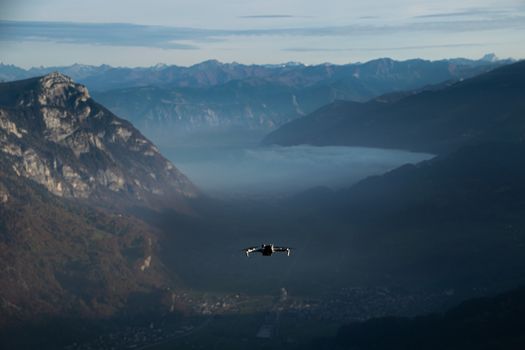
A drone flies over the scenic Walenstadt Valley in the Swiss Alps at sunrise, capturing stunning mountain views. Photo: Esmerald Heqimaj / Pexels
Switzerland, renowned for its precision and adherence to international standards, has fully embraced the European Union Aviation Safety Agency (EASA) regulations for unmanned aircraft systems (UAS) since January 1, 2023. This significant shift harmonizes Swiss drone operations with those across the European Economic Area, aiming to standardize safety, security, and privacy across borders. For anyone looking to fly a drone in Switzerland, whether for leisure or professional purposes, understanding this integration is paramount. The former national regulations, while robust, have largely been superseded by the EASA framework, which categorizes drone operations into Open, Specific, and Certified, based on the level of risk involved. The 'Open' category covers most recreational and low-risk commercial flights. It's characterized by strict limitations on drone weight, altitude, and proximity to people. Within the Open category, there are further sub-categories: A1, A2, and A3. A1 allows flying small drones (under 250g) over people, with some restrictions. A3 applies to larger drones (up to 25kg) and requires flying far from people and urban areas. The A2 sub-category bridges the gap, allowing operations closer to people with a slightly heavier drone, provided the pilot holds an A2 'Certificate of Competency' and adheres to specific safety distances. This structured approach ensures that even basic drone flights maintain a high level of safety. Moving beyond the Open category, the 'Specific' category addresses operations that pose a moderate risk and cannot be conducted under the Open rules. This typically includes flights that exceed the Open category's limitations, such as flying heavier drones in populated areas, beyond visual line of sight (BVLOS) operations, or complex industrial inspections. To operate in the Specific category, operators must obtain an operational authorization from the Federal Office of Civil Aviation (FOCA) or declare adherence to a Standard Scenario (STS), if applicable. This often involves a detailed risk assessment (SORA – Specific Operations Risk Assessment) and the development of an operational manual. The FOCA evaluates these applications to ensure that adequate mitigation measures are in place to manage the identified risks. This category is crucial for businesses and specialized applications, providing a pathway for innovation while maintaining safety. Finally, the 'Certified' category is reserved for the highest-risk operations, mirroring those of manned aviation. This includes large, complex drones carrying dangerous goods or operating over assemblies of people where the consequences of an incident could be catastrophic. Operations in this category require certification of the drone, the operator, and the remote pilot, similar to conventional aircraft. While less common for the average drone user, this category highlights the comprehensive nature of the EASA framework, covering the entire spectrum of UAS operations from a small toy drone to an uncrewed air taxi. Navigating these categories is the first and most critical step for any drone operator in Switzerland. Understanding which category your intended flight falls into will dictate the subsequent requirements for registration, pilot certification, and operational procedures. For more details on the general EASA framework, consult EASA drone rules explained.

Mandatory Registration, Pilot Certificates, and Insurance for Swiss Drone Operators
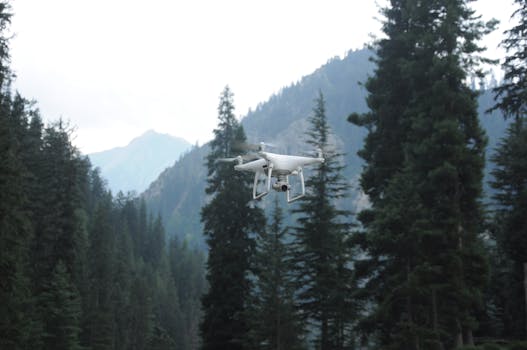
Aerial drone captures breathtaking view in a lush mountain forest, showcasing modern technology and natural beauty. Photo: Abrar Hashim / Pexels
Before any drone takes to the Swiss skies, operators must fulfill several mandatory requirements, central to which are registration, pilot certification, and adequate insurance. These measures are designed to ensure accountability, competence, and financial coverage in the event of an incident, thereby safeguarding both drone operators and the public. Operator registration is a foundational step under the EASA framework. If you operate a drone weighing 250 grams or more, or any drone equipped with a sensor capable of capturing personal data (e.g., a camera), you are legally required to register as a UAS operator. This registration is carried out via the FOCA's dedicated online platform, UAS.gate. Upon successful registration, you will receive a unique operator identification number, which must be clearly affixed to all drones you operate. This ID is crucial for traceability and enforcement, allowing authorities to quickly identify the responsible party should an incident occur. It’s important to distinguish between operator registration and drone registration; typically, it's the operator who registers, not each individual drone, unless operating in the Certified category. Pilot certification is another critical component, directly linked to the operational category and sub-category. For operations in the 'Open' category, two main certificates are relevant: the A1/A3 'Certificate of Competency' and the A2 'Remote Pilot Certificate'. The A1/A3 certificate is obtained by completing free online training and passing an online theoretical knowledge exam through UAS.gate. This certificate covers basic operational rules, air law, human performance, and privacy. It is mandatory for flying drones weighing 250g or more in the A1 sub-category (e.g., C1 class drones) and for all drones up to 25kg in the A3 sub-category (flying far from people). The A2 certificate, on the other hand, is required for flying C2 class drones (up to 4kg) closer to people in the A2 sub-category. Obtaining an A2 certificate involves self-practical training, an additional theoretical knowledge exam focusing on meteorology, drone flight performance, and technical mitigations, and often requires holding the A1/A3 certificate first. These certificates ensure that pilots possess the necessary knowledge to operate their drones safely and responsibly. Beyond registration and certification, liability insurance is an absolute must. In Switzerland, all drones weighing 250 grams or more are legally required to have third-party liability insurance with a minimum coverage of CHF 1 million. This insurance covers damages caused to third parties (persons or property) by the drone. Many standard household liability insurance policies do not cover drone operations, or only cover very small drones. Therefore, it is crucial for drone operators to verify their existing insurance policy or procure specific drone liability insurance. Operating a drone without the required insurance is not only illegal but can also lead to significant financial repercussions in the event of an accident. Always ensure your insurance is valid and covers your specific type of drone and intended operations. These three pillars – registration, certification, and insurance – form the bedrock of legal and responsible drone operation in Switzerland, ensuring a safe and fair environment for all airspace users.

Navigating No-Fly Zones, Privacy, and Environmental Considerations in Switzerland
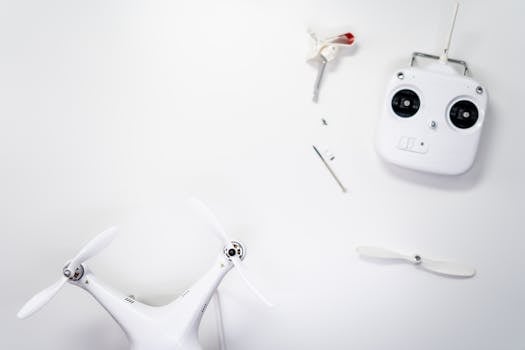
A flat lay of a drone kit including a controller and spare propellers on a white background. Photo: cottonbro studio / Pexels
Switzerland's stunning landscapes and dense urban areas present unique challenges and responsibilities for drone operators, particularly concerning no-fly zones, privacy, and environmental protection. Adhering to these regulations is not just a legal obligation but a commitment to respectful and sustainable drone use. No-fly zones (NFZs) are critical areas where drone operations are restricted or prohibited to ensure public safety, protect sensitive infrastructure, and maintain air traffic control. In Switzerland, the FOCA provides detailed information on these restricted areas. Key no-fly zones include: * **Around airports and airfields:** Strict restrictions apply to protect manned aircraft operations. Drones are typically prohibited within a certain radius, often several kilometers, and specific altitudes. * **Military zones and critical infrastructure:** Areas like military bases, power plants, and other sensitive installations are generally off-limits for drone flights. * **National parks and nature reserves:** To protect wildlife and fragile ecosystems, drone operations are often restricted or require special permits in these areas. * **Crowded events and public gatherings:** Flying over assemblies of people is generally prohibited in the Open category and requires specific authorization in the Specific category due to the inherent risks. Before every flight, it is imperative to consult up-to-date aeronautical charts and official FOCA resources, such as the UAS.gate portal or dedicated drone maps (e.g., the Switzerland-specific drone map by Skyguide), to identify any temporary or permanent restrictions. Ignorance of these zones is not a valid defense and can lead to severe penalties. For a broader understanding of how these zones are typically enforced, you might want to read about global drone no-fly zones. Privacy is another significant concern in Switzerland, a country known for its strong data protection laws. Drone operators must be acutely aware of the Swiss Federal Act on Data Protection (FADP) and the General Data Protection Regulation (GDPR) if personal data (e.g., identifiable individuals, license plates) is captured. Key privacy considerations include: * **Respecting private property:** Do not fly over private property at low altitudes without explicit permission from the owner. * **Avoiding recording identifiable individuals:** Unless you have obtained their explicit consent, avoid capturing images or videos that allow for the identification of individuals. If incidental recording occurs, anonymize the data before publishing. * **Transparency:** If operating in a public space, consider informing individuals that a drone is being operated and what data is being collected. Environmental considerations extend beyond simply avoiding nature reserves. Drone noise can disturb wildlife and residents, especially in tranquil alpine regions. Operators are encouraged to fly responsibly, minimize disturbance, and adhere to any local bylaws that might impose additional restrictions on noise or operating hours. The Swiss commitment to environmental protection means that drone pilots are expected to be mindful of their impact on both the natural environment and local communities. By proactively checking no-fly zones, prioritizing privacy, and considering the environmental impact, drone operators can ensure their activities are both legal and socially responsible in Switzerland.

Common Mistakes and Best Practices for Drone Pilots in Switzerland

Navigating the complexities of drone regulations in Switzerland can be challenging, even for experienced pilots. Awareness of common pitfalls and adherence to best practices will ensure a safe, legal, and enjoyable drone experience. **Common Mistakes to Avoid:** * **Ignoring Registration:** Many hobbyists overlook the operator registration requirement, especially if their drone is under 250g but has a camera. Remember, if it has a camera, you likely need to register. * **Lack of Pilot Certificates:** Assuming basic flight knowledge is enough. The A1/A3 certificate is often mandatory, and the A2 certificate opens up more operational possibilities but requires specific training. * **Flying in No-Fly Zones:** Relying solely on your drone's built-in NFZ warnings. These are not always up-to-date or comprehensive. Always cross-reference with official FOCA maps (UAS.gate, Skyguide). * **Insufficient Insurance:** Assuming your household insurance covers drone damage. Most don't, or have very low limits. Always secure dedicated drone liability insurance with at least CHF 1 million coverage. * **Disregarding Privacy:** Flying low over private properties or filming identifiable individuals without consent. Switzerland has strict privacy laws; be respectful and discreet. * **Bypassing Visual Line of Sight (VLOS):** Attempting to fly your drone beyond your direct visual line of sight without specific authorization (which falls under the Specific category). VLOS is a cornerstone of Open category operations. * **Not Checking Local Restrictions:** Switzerland has many cantonal and municipal regulations that can supplement federal rules. Always check for local bylaws in your intended flight area. **Best Practices for Responsible Drone Operation:** 1. **Stay Informed:** Regularly check the FOCA's UAS.gate portal for updates to regulations and new guidance documents. 2. **Plan Your Flights:** Before every flight, use an official drone map to check for NFZs and temporary restrictions. Assess weather conditions (wind, rain, fog). 3. **Maintain Your Drone:** Ensure your drone is in good working order. Check propellers, battery levels, and firmware updates before each flight. 4. **Respect Others:** Be mindful of noise, privacy, and potential disturbances to people and wildlife. Maintain safe distances. 5. **Carry Documentation:** Always have your operator ID, pilot certificate, and proof of insurance readily available when flying. 6. **Practice Emergency Procedures:** Know how to react in case of a flyaway, loss of signal, or unexpected battery drain. 7. **Ethical Data Collection:** If capturing footage, consider the ethical implications. Only collect necessary data and respect intellectual property rights. By proactively addressing these points, drone pilots can significantly reduce risks, avoid legal issues, and contribute to a positive public perception of drone technology in Switzerland.

Comparison

FeatureOpen Category (A1/A3)Open Category (A2)Specific CategoryCertified Category
Max Drone WeightUp to 25kg (A3), <900g (A1)Up to 4kg (C2 class)No explicit limit, based on SORANo explicit limit, based on certification
Pilot CertificateA1/A3 (online exam)A1/A3 + A2 (online exam + practical)Operational Authorization (SORA)Pilot & Operator Certification
Proximity to PeopleFar from people (A3), over people (A1, <250g)Close to people (with distance rules)Varies, based on authorizationVaries, highly regulated
RegistrationOperator ID requiredOperator ID requiredOperator ID + AuthorizationOperator & Drone Certification

What Readers Say

"This guide to drone regulations Switzerland is incredibly detailed. It helped me understand the EASA transition and what certificates I needed for my new DJI Mini 3 Pro. Now I feel confident flying legally."

Marc S. · Zurich, Switzerland

"As a professional photographer, the section on Specific Category operations was invaluable. I now have a clearer path to getting my operational authorization for complex shoots in Switzerland."

Sophie L. · Geneva, Switzerland

"I was totally lost with all the new rules, especially about the A1/A3 and A2 certificates. This article broke it down step-by-step, and I successfully completed my A1/A3 online exam thanks to the clear explanations."

David P. · Bern, Switzerland

"Very comprehensive! I appreciate the emphasis on privacy and local restrictions. While it covers a lot, a few more examples of specific no-fly zones would have been helpful, but overall, an excellent resource for drone regulations Switzerland."

Elena R. · Lucerne, Switzerland

"Running a small drone inspection business, understanding the insurance requirements and the distinction between Open and Specific categories is crucial. This guide provided the clarity I needed to ensure full compliance."

Thomas B. · Basel, Switzerland

Frequently Asked Questions

What are the most important drone regulations Switzerland for hobbyists to know?

For hobbyists, the most crucial regulations involve registering as an operator on UAS.gate, obtaining the A1/A3 remote pilot certificate (for drones 250g+ or with a camera), ensuring you have adequate liability insurance, and strictly adhering to no-fly zones. Always fly within visual line of sight and respect privacy.

Do I need a drone license to fly in Switzerland?

Yes, for most drones. If your drone weighs 250g or more, or if it has a camera, you are typically required to obtain at least the A1/A3 'Certificate of Competency' by completing online training and passing an exam via UAS.gate. Heavier drones or operations closer to people may require an A2 'Remote Pilot Certificate'.

How do I register my drone in Switzerland?

You register as a 'UAS Operator' (not the drone itself, generally) through the Federal Office of Civil Aviation's (FOCA) UAS.gate online portal. This applies if your drone is 250g or more, or if it has a camera. Upon registration, you'll receive a unique operator ID that must be affixed to your drone(s).

What is the cost associated with drone registration and licensing in Switzerland?

Operator registration on UAS.gate typically incurs a small administrative fee (around CHF 30-50 for initial registration). The A1/A3 online training and exam are generally free. The A2 theoretical exam might have a separate fee charged by the examining body, but the official FOCA components are often free or minimal.

How do Swiss drone regulations compare to EU drone regulations?

Switzerland has fully adopted the European Union Aviation Safety Agency (EASA) drone regulations since January 1, 2023. This means Swiss drone laws are harmonized with those in EU member states, ensuring consistency and mutual recognition of pilot certificates and operational authorizations within the EASA framework.

Who should be particularly careful about drone regulations in Switzerland?

Anyone operating drones, especially those flying for commercial purposes, near airports, over populated areas, or in sensitive natural reserves, must be particularly careful. Hobbyists using drones over 250g or with cameras also need to pay close attention to registration, certification, and no-fly zones.

Are there any specific safety risks or considerations for flying drones in the Swiss Alps?

Yes, flying in the Swiss Alps presents unique risks: rapidly changing weather, strong winds, high altitudes affecting drone performance, limited GPS signal in deep valleys, and potential disturbances to wildlife (e.g., eagles). Always check mountain weather forecasts, respect national park restrictions, and be aware of your drone's altitude limits.

What future trends can we expect in drone regulations Switzerland?

Future trends will likely focus on further integration of drones into urban air mobility, increased automation, and more sophisticated traffic management systems (UTM). We can expect clearer guidelines for BVLOS operations, package delivery, and potentially more specific rules for anti-drone technology and data security.

Mastering drone regulations in Switzerland is essential for a safe and rewarding flying experience. By adhering to these guidelines, you not only ensure legal compliance but also contribute to the responsible growth of drone technology. Fly smart, stay informed, and enjoy the breathtaking Swiss skies responsibly.

Topics: drone regulations SwitzerlandSwiss drone lawUAS Switzerlanddrone categories SwitzerlandEASA drone rules Switzerland
Leo List
Brampton weed
Adultwork